Rackmount AI NAS systems
Updated
Rackmount AI NAS UK
A rackmount AI NAS is a 1U to 4U chassis built for a 19-inch rack rather than a desk. You gain rails, redundant power on the larger models and front-serviceable drives; you give up quiet running, because rack units use small high-speed fans. For local AI the rack form factor matters less than the memory ceiling and the PCIe slot, so check those first.
Which systems rank highest right now?
9 systems have a current price and qualify; all are ranked. The order comes from the Business score and updates as prices change. 22 more without a current price are listed under Worth watching.
- 1
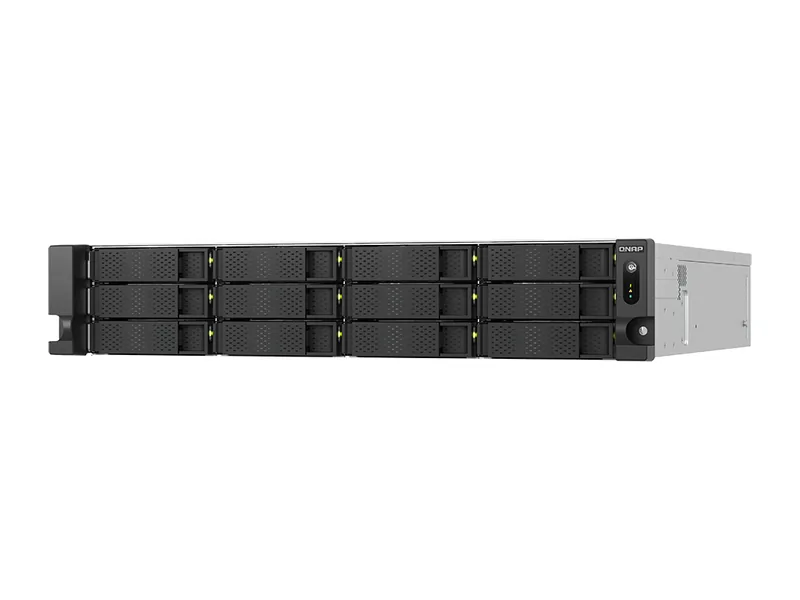
QNAP TS-h1277AXU-RP
AI Ready192GB max RAM · 12 bays · 2 x 10GbE
- Up to 192GB memory: 70B class models at higher-quality quantization, or large mixture-of-experts models at 4-bit (Estimated)
- GPU path: PCIe x8 slot
- 2 x 10GbE networking, 12 bays
73/100 Business
$4,661.42
Amazon US · Verified
Ships from the US; delivery and import charges shown at checkout
- 2
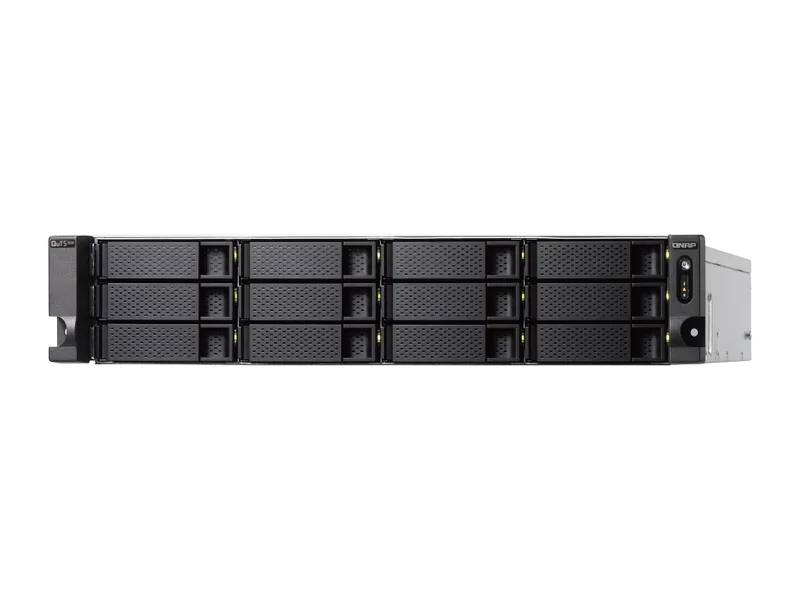
QNAP TS-h1886XU-RP R2
AI Ready128GB max RAM · 18 bays · 2 x 10GbE
- Up to 128GB memory: 70B class models at higher-quality quantization, or large mixture-of-experts models at 4-bit (Estimated)
- GPU path: PCIe x8 slot
- 2 x 10GbE networking, 18 bays
68/100 Business
$5,099.00
Amazon US · Verified
Ships from the US; delivery and import charges shown at checkout
- 3
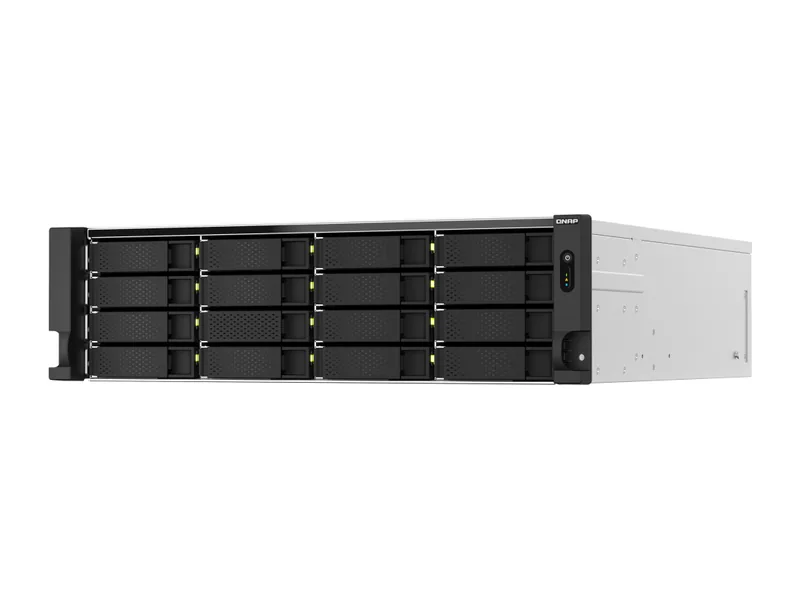
QNAP TS-h2287XU-RP
AI Ready128GB max RAM · 22 bays · 2 x 10GbE
- Up to 128GB memory: 70B class models at higher-quality quantization, or large mixture-of-experts models at 4-bit (Estimated)
- GPU path: PCIe x8 slot
- 2 x 10GbE networking, 22 bays
68/100 Business
$6,209.00
Amazon US · Verified
Ships from the US; delivery and import charges shown at checkout
- 4
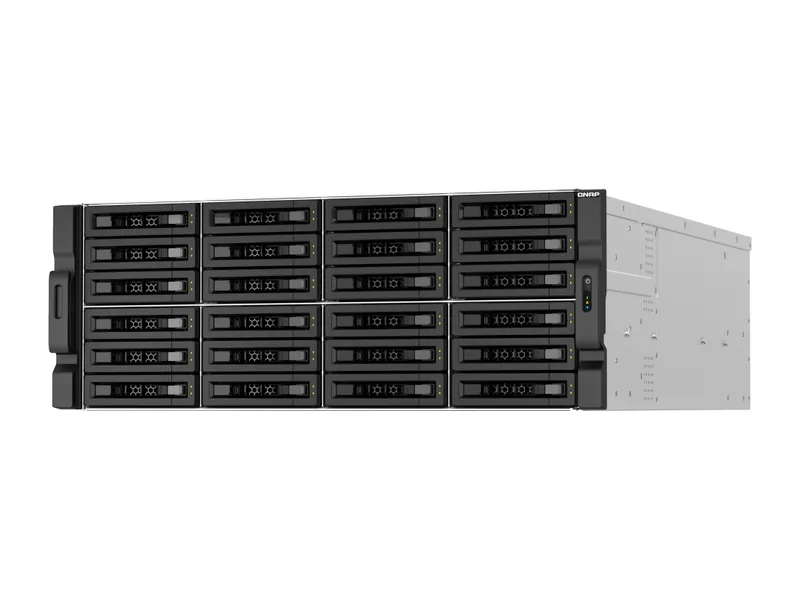
QNAP TS-h3087XU-RP
AI Ready128GB max RAM · 30 bays · 2 x 10GbE
- Up to 128GB memory: 70B class models at higher-quality quantization, or large mixture-of-experts models at 4-bit (Estimated)
- GPU path: PCIe x8 slot
- 2 x 10GbE networking, 30 bays
67/100 Business
$11,999.00
Amazon US · Verified
Ships from the US; delivery and import charges shown at checkout
- 5
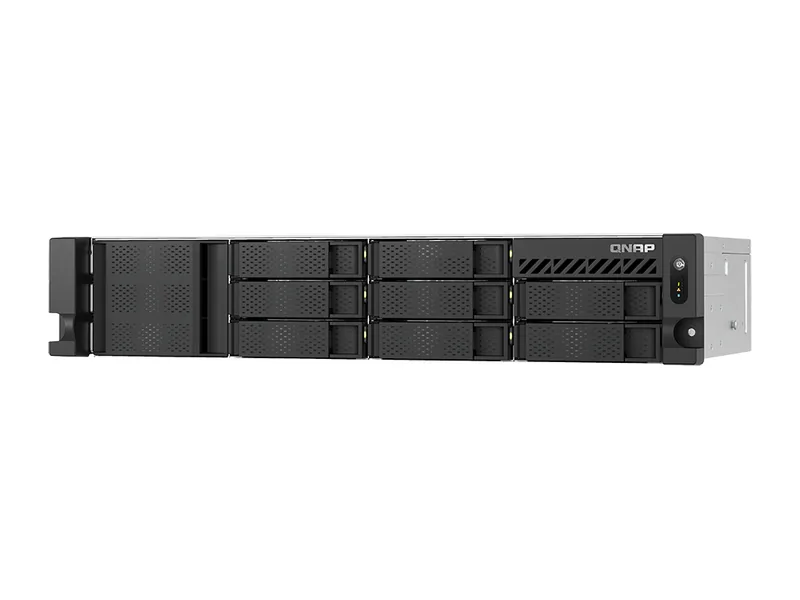
QNAP TS-855eU
AI Capable64GB max RAM · 8 bays · 2 x 2.5GbE
- Up to 64GB memory: 32B class models comfortably, and 70B class models at 4-bit with little headroom (Estimated)
- GPU path: PCIe x4 slot
- 2 x 2.5GbE networking, 8 bays
50/100 Business
$1,699.00
Amazon US · Verified
Ships from the US; delivery and import charges shown at checkout
- 6
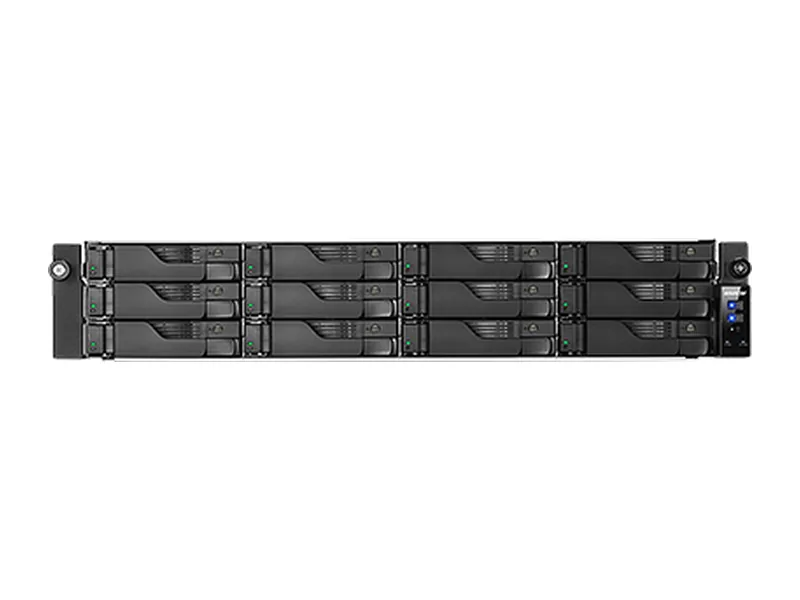
ASUSTOR Lockerstor 12RD (AS6512RD)
AI Capable128GB max RAM · 12 bays · 2 x 2.5GbE
- Up to 128GB memory: 70B class models at higher-quality quantization, or large mixture-of-experts models at 4-bit (Estimated)
- 2 x 2.5GbE networking, 12 bays
50/100 Business
£2,611.20
Amazon UK · Verified
- 7
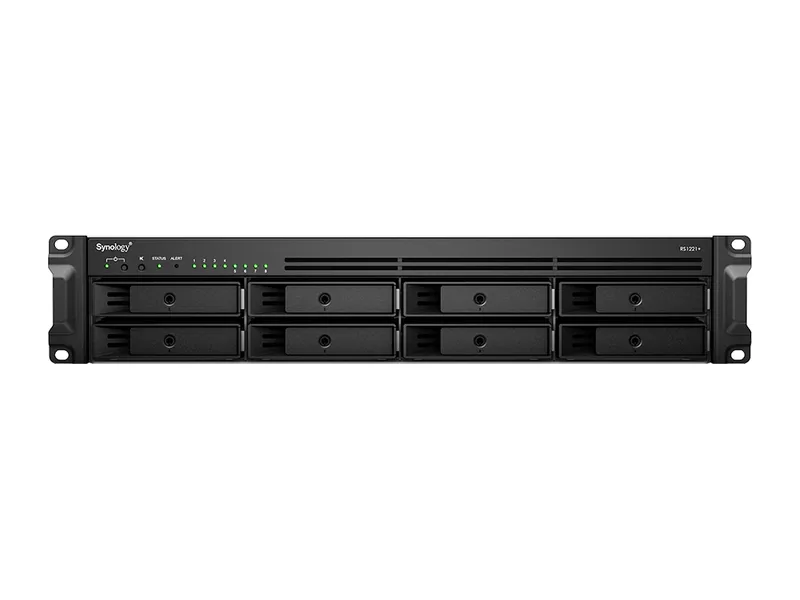
Synology RS1221+
AI Capable32GB max RAM · 8 bays · 1GbE
- Up to 32GB memory: models up to the 14B class, with 32B class models a tight fit (Estimated)
- 1GbE networking, 8 bays
31/100 Business
$1,649.99
Amazon US · Verified
Ships from the US; delivery and import charges shown at checkout
- 8
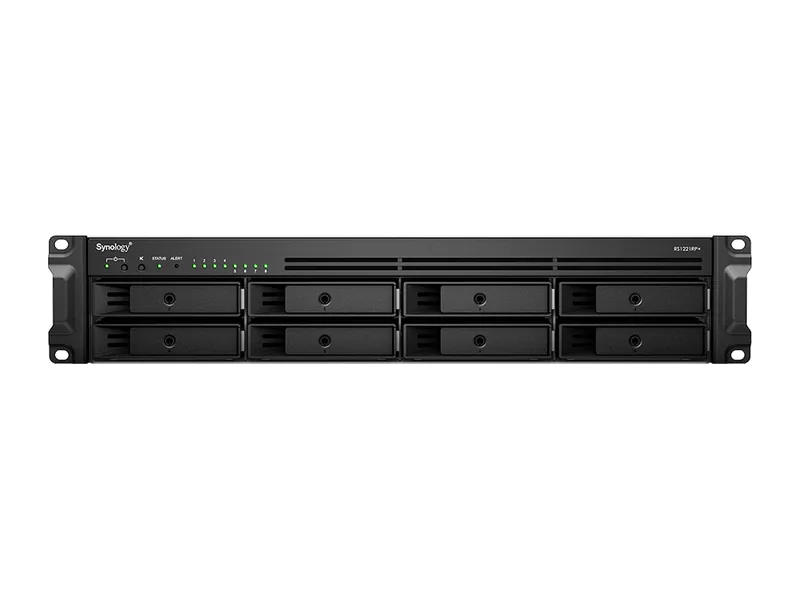
Synology RS1221RP+
AI Capable32GB max RAM · 8 bays · 1GbE
- Up to 32GB memory: models up to the 14B class, with 32B class models a tight fit (Estimated)
- 1GbE networking, 8 bays
30/100 Business
$2,149.99
Amazon US · Verified
Ships from the US; delivery and import charges shown at checkout
- 9
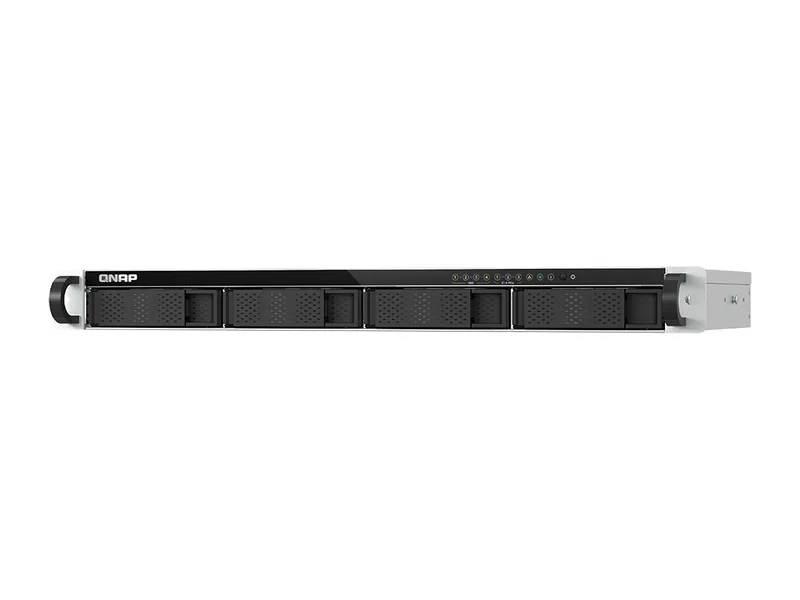
QNAP TS-h765eU
AI Capable16GB max RAM · 4 bays · 2 x 2.5GbE
- Up to 16GB memory: 7B to 8B class models (Estimated)
- 2 x 2.5GbE networking, 4 bays
28/100 Business
£999
Amazon UK · Verified
Worth watching
These fit this list but have no current price right now, so they are not ranked. They take a place as soon as a price is verified.
- 45Drives HL15No verified price
- QNAP TS-h1677AXU-RPNo verified price
- QNAP TS-h1683XU-RPNo verified price
- ASUSTOR Lockerstor 12R Pro Gen2 (AS7212RDX)No verified price
- iXsystems TrueNAS R20No verified price
- Synology RS3621xs+No verified price
- Synology RS4021xs+No verified price
- iXsystems TrueNAS R10No verified price
- QNAP TS-h1655XeU-RPNo verified price
- iXsystems TrueNAS Mini RNo verified price
- iXsystems TrueNAS R30No verified price
- ASUSTOR Lockerstor 16R Pro (AS7116RDX)No verified price
- Synology RS2423RP+No verified price
- TerraMaster U16-722-2224No verified price
- TerraMaster U8-450No verified price
- TerraMaster U12-500 PlusNo verified price
- Synology RS3621RPxsNo verified price
- TerraMaster U24-722-2224No verified price
- ASUSTOR Lockerstor 4RD (AS6504RD)No verified price
- Synology RS2821RP+No verified price
- TerraMaster U4-423No verified price
- Synology RS822+No verified price
What makes a rackmount NAS different?
The chassis, mostly. The processors, memory and operating systems in a rack unit are usually the same parts you find in the desktop model one rung up the same range. What changes is everything around them: a short deep box that bolts into a 19-inch rack, rails so it slides out for service, drives that pull from the front, and power supplies that on the larger units are redundant and hot-swappable.
That brings two consequences people underestimate. The first is noise. A 1U chassis has no room for a large slow fan, so it uses small fans spinning fast. A rack unit in a cupboard under the stairs is not a quiet machine, and no firmware setting will make it one. If the NAS will live in the same room as people, a desktop tower is almost always the better buy.
The second is depth. Rack units are deep. Check the usable depth of your rack and the clearance behind it for cabling before you order anything, because a unit that is 10mm too long for a short wall-mounted rack is an expensive mistake.
Does the rack form factor help local AI?
Not directly. A model runs at the speed the processor, memory and any graphics card allow, and those are the same whether the parts sit in a tower or a rack. What the rack format tends to bring with it is the hardware local AI actually wants:
| Rack advantage | Why it matters for AI |
|---|---|
| More drive bays | Larger model libraries and vector stores stay on fast local storage |
| Redundant power | An inference service that other people depend on stays up |
| Full-height PCIe slots on 2U and larger | Room for a graphics card with real cooling |
| 10GbE and faster as standard | Moving embeddings and datasets in and out stops being the bottleneck |
The exception is the 1U unit. One rack unit of height leaves no room for a standard graphics card and very little airflow for a hot processor, so 1U models are generally the weakest choice for inference in this segment. If you want GPU acceleration in a rack, start at 2U.
How many bays do you actually need?
Work backwards from the data, not the chassis. A model library is small: even a generous local collection of quantised weights rarely passes 500GB. What fills a rack NAS is everything else: backups, video, archives, virtual machine images. Count that first, add the redundancy overhead of your chosen RAID level, then add roughly half again for three years of growth.
Where bay count does touch AI is caching. On a unit with both SATA bays and M.2 slots, the sensible layout is spinning disks for bulk storage and NVMe for the model files and the vector index. Loading a 20GB model from a hard disk array every time a container restarts is slow and entirely avoidable.
Memory is the ceiling that matters
The single number worth checking before anything else is maximum memory. It sets the largest model the system can hold, and unlike almost everything else about a NAS it cannot be changed later by adding a card. A unit that tops out at 32GB will never run a 70B model, however many bays it has and however fast its network is.
As a rough guide, and these are estimates rather than measurements: 16GB handles models up to around 8B parameters at 4-bit quantisation; 32GB reaches the 14B class comfortably; 64GB opens up 32B; and 70B class models want 64GB at an absolute minimum, with 96GB or more for any headroom. Remember the operating system, your containers and the file cache all want memory too, so never size a machine on the model alone.
Networking: where rack units earn their keep
Desktop NAS units still ship with 2.5GbE as a default. Rack units far more often give you 10GbE as standard and a PCIe slot you can fill with a faster card. If several people will query the same model, or you are moving large datasets in to be embedded, this is the difference between a system that feels responsive and one that does not.
Dual 10GbE is worth paying for even if you only use one port today. Link aggregation and failover both become available later with no hardware change, and a second port costs very little when it is built in.
Buying notes
Prices for rack hardware move more than for desktop units, and a figure online says nothing about the support terms behind it. The price table on each system page shows a current price only where one meets the rules in How we choose; where none appears, judge the system on its specifications, warranty term and support first, and confirm the warranty covers the UK before you order.
Buy the rails. They are often a separate line item, they are chassis-specific, and a rack NAS resting on a shelf is awkward to service and easy to damage.
Common questions
Can I put a graphics card in a rackmount NAS?
In a 2U or larger chassis with a free full-height PCIe slot, usually yes, but check the manufacturer's compatibility list, the physical length of the card and whether the power supply can deliver what the card draws. In 1U, treat it as a no.
Are rack NAS units faster than desktop ones?
Not inherently. Compare the processor, memory ceiling and networking on the specific models rather than assuming the rack unit wins.
How loud is a rackmount NAS?
Loud enough that it belongs in a rack room, a garage or a basement rather than an office. The smaller the chassis height, the louder it will be under load.
What do these systems cost today?
Live Amazon UK prices, each with the time it was last verified. Where a system has no verified Amazon UK offer, its Amazon US price is shown in US dollars and marked.
| System | Price | Stock | Buy |
|---|---|---|---|
| $4,661.42 Amazon US · Verified Ships from the US; delivery and import charges shown at checkout | In stock | Buy on Amazon |
| $5,099.00 Amazon US · Verified Ships from the US; delivery and import charges shown at checkout | In stock | Buy on Amazon |
| $6,209.00 Amazon US · Verified Ships from the US; delivery and import charges shown at checkout | In stock | Buy on Amazon |
| $11,999.00 Amazon US · Verified Ships from the US; delivery and import charges shown at checkout | In stock | Buy on Amazon |
| $1,699.00 Amazon US · Verified Ships from the US; delivery and import charges shown at checkout | In stock | Buy on Amazon |
| £2,611.20 Amazon UK · Verified | In stock | Buy on Amazon |
| $1,649.99 Amazon US · Verified Ships from the US; delivery and import charges shown at checkout | In stock | Buy on Amazon |
| $2,149.99 Amazon US · Verified Ships from the US; delivery and import charges shown at checkout | In stock | Buy on Amazon |
| £999 Amazon UK · Verified | In stock | Buy on Amazon |
Product prices and availability are accurate as of the date/time indicated and are subject to change. Any price and availability information displayed on Amazon.co.uk or Amazon.com, as applicable, at the time of purchase will apply to the purchase of this product.
How did we rank these?
Every rackmount system we track -- 1U to 4U units built for a 19-inch rack -- ranked by the Business profile.
Only systems with a current price take a rank. That is the Amazon UK price; where a system has no current Amazon UK offer, its Amazon US price is used instead, shown in US dollars and marked Amazon US. A price counts only if it was verified in the last 24 hours and is sold by Amazon, the manufacturer's own store or a merchant we have approved for that brand. Where the manufacturer publishes a recommended price for that configuration in the same currency, the price must also sit between 40% and 135% of it; where it does not (Synology publishes none, for example), only the seller check applies. Systems that fit the list without such a price appear under Worth watching and are not ranked.
Scores come from the AINAS Score: each system gets six component scores from documented rules, weighted by the Business profile as shown. The value component scores the displayed price. An Amazon US price is converted to pounds at the exchange rate set in our admin (currently 1 US dollar = £0.7502), for scoring and the price filters only; the converted figure is never shown. Commission plays no part.
How we choose sets out the full method: the verification labels, every score rule, the price checks and when a page is held back from search.
Refine this list in the AI NAS Finder with your own budget, memory, bays and networking, or see the full leaderboard.
Business weights
- AI capability
- 20%
- Memory
- 20%
- GPU capability
- 10%
- Networking
- 20%
- Storage expansion
- 15%
- Value
- 15%