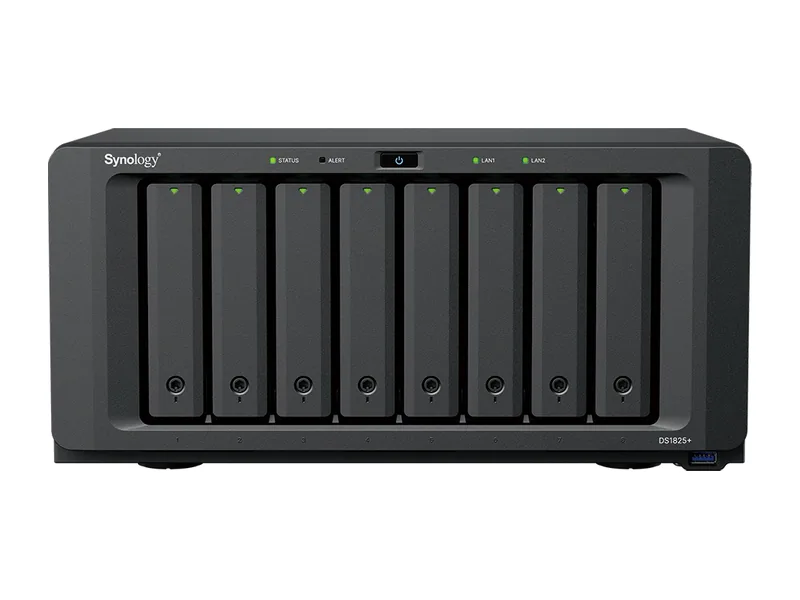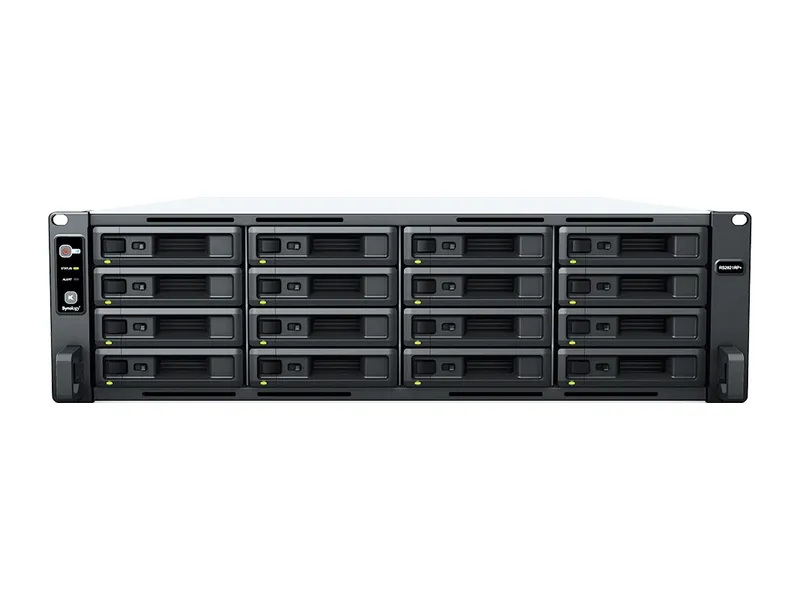
32GB max RAM · 16 bays · 1GbE
AINAS Score 34
No verified price
AI CapableQNAP
Why AI Capable: Intel Celeron N5095 quad-core with UHD Graphics, no NPU, 16 GB DDR4 maximum and only a PCIe Gen3 x2 slot with no GPUs on QNAP lists; Edge TPU and Hailo-8 M.2 accelerators are supported for vision tasks only.
Updated
Can the QNAP TS-664 run local AI?
Partly. The QNAP TS-664 runs local models on Intel Celeron N5095 alone, and its 16GB ceiling allows 7B to 8B class models (Estimated), but replies will be slow without graphics acceleration.
No graphics card can be fitted, which keeps every model on the CPU.
Local LLM support is documented by the manufacturer.
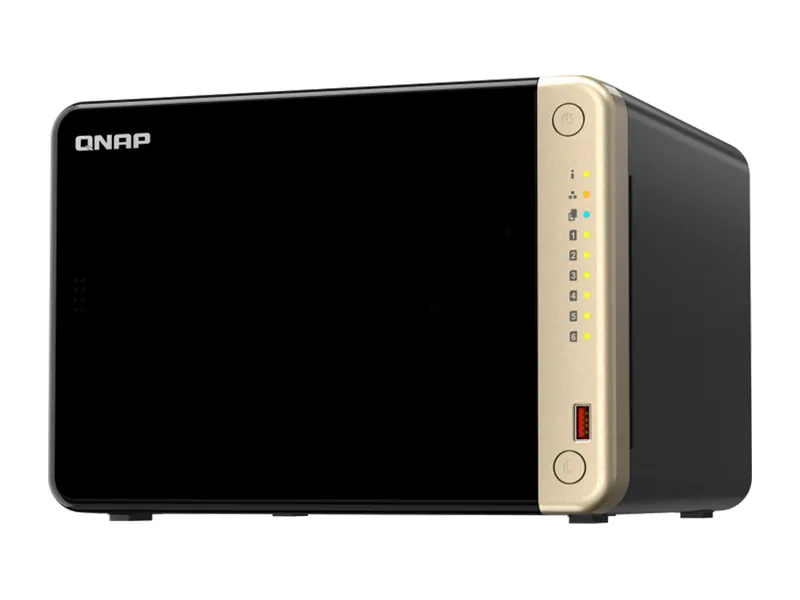
The TS-664 suits a buyer who wants a six-bay home or small-office NAS first and a light AI add-on second. It holds 6 drives, has 2 M.2 slots, two 2.5GbE ports and 8GB of memory as shipped, expandable to 16GB of DDR4 SODIMM. Docker and virtual machines are supported, and Ollama and Open WebUI are vendor confirmed through Container Station. On AI it is a small-model machine. Qwen3 8B fits at Q4 (Estimated), and Llama 3.2 3B fits at both Q4 and Q8 (Estimated). Qsirch AI semantic search, QuMagie photo albums and QVR surveillance are vendor confirmed. It carries a 3 year warranty and an AINAS Score of 34, and it runs QTS 6.1.0 or QuTS hero h6.1.0.
The memory ceiling and the lack of a GPU path rule the TS-664 out for anyone planning to run larger models. Memory tops out at 16GB and the only expansion slot is PCIe Gen3 x2 with no GPUs on the vendor compatibility list, so inference is CPU only. Gemma 3 12B at Q4 is marginal (Estimated), and Mistral Small 3 24B does not fit at Q4 (Estimated), nor do the 32B models, which need 20GB at Q4. Buyers who want those models should look for a system with a GPU expansion path or an NPU, and memory well above 20GB. Buyers who want ECC memory should also note that the TS-664 does not support it, whichever module they fit.
Amazon US
TS-664-8G
Ships from the US; delivery and import charges shown at checkout
$799.00
Verified
In stock
Buy on AmazonProduct prices and availability are accurate as of the date/time indicated and are subject to change. Any price and availability information displayed on Amazon.co.uk or Amazon.com, as applicable, at the time of purchase will apply to the purchase of this product.
Each capability shows how it was confirmed: Verified by AINAS, Vendor confirmed, Community confirmed or Unverified.
| Capability | Supported | Evidence | Note |
|---|---|---|---|
| Local LLM | Limited | Vendor confirmed | QNAP Ollama guide (x86): 8 GB for 3B, 16 GB for 7B models; 16 GB max, CPU only. |
| Ollama | Yes | Vendor confirmed | Container Station Ollama tutorial for x86_64 QTS/QuTS hero. |
| Open WebUI | Yes | Vendor confirmed | QNAP Open WebUI tutorial, QTS 5.2 / QuTS hero h5.2+. |
| RAG | Limited | Unverified | Qsirch AI Knowledge Search (RAG) uses cloud LLMs; not confirmed for this model. |
| AI search | Yes | Vendor confirmed | Qsirch AI Semantic Search needs 64-bit x86 and 8 GB RAM (8G model qualifies; 4G needs upgrade). |
| GPU expansion | No | Vendor confirmed | PCIe Gen3 x2 slot only; no GPUs on compatibility list. |
| Hardware acceleration | Yes | Vendor confirmed | Intel UHD Graphics video conversion; Coral Edge TPU and Hailo-8 M.2 (26 TOPS) on AI accelerator list. |
| AI photos | Yes | Vendor confirmed | QuMagie albums by people, objects, locations; Edge TPU speeds recognition. |
| AI video | Yes | Vendor confirmed | QVR Face real-time facial recognition on product page. |
| Surveillance AI | Yes | Vendor confirmed | QVR Pro 8 free channels (QTS); QVR Surveillance 2 free + 6 on registration. |
Calculated from the TS-664's memory and each model's published size at each quantization. Rows marked Estimated are calculations, not benchmarks. Check any model.
| Model | Best quantization | Runs? | Memory needed | Expected performance | Verification |
|---|---|---|---|---|---|
| Llama 3.2 3BLlama, 3.21B | Q8 | Yes | 13GB | Not measured | Estimated |
| Llama 3.1 8BLlama, 8.03B | Q5 | Yes | 15GB | Not measured | Estimated |
| Qwen3 8BQwen, 8.19B | Q4 | Yes | 15GB | Not measured | Estimated |
| Gemma 3 12BGemma, 11.8B | Q4 | Marginal | 15GB | Not measured | Estimated |
| Qwen3 14BQwen, 14.8B | Q4 | Marginal | 16GB | Not measured | Estimated |
| Phi-4 14BPhi, 14.7B | Q4 | Marginal | 16GB | Not measured | Estimated |
| Mistral Small 3 24BMistral, 23.6B | None fits | No | 25GB at Q4 | Not measured | Estimated |
| Gemma 3 27BGemma, 27B | None fits | No | 29GB at Q4 | Not measured | Estimated |
| Qwen3 30B A3BQwen, 30.5B | None fits | No | 31GB at Q4 | Not measured | Estimated |
| Qwen3 32BQwen, 32.8B | None fits | No | 32GB at Q4 | Not measured | Estimated |
| DeepSeek-R1 32B (Qwen distill)DeepSeek, 32.8B | None fits | No | 32GB at Q4 | Not measured | Estimated |
| Llama 3.3 70BLlama, 70.6B | None fits | No | 60GB at Q4 | Not measured | Estimated |
| Llama 4 Scout 17Bx16ELlama, 109B | None fits | No | 89GB at Q4 | Not measured | Estimated |
| Qwen2.5 72BQwen, 72.7B | None fits | No | 65GB at Q4 | Not measured | Estimated |
| Mistral Large 2 123BMistral, 123B | None fits | No | 96GB at Q4 | Not measured | Estimated |
One verdict per workload, from the TS-664's use-case scores and capability rows. Unknown means we cannot confirm it, not that it probably works.
Poor for local LLM work, and support is only limited. QNAP's Ollama guide is CPU only with a 16GB maximum, giving 8GB for 3B and 16GB for 7B models, and Qwen3 8B fits at Q4 (Estimated).
Poor for private RAG, and a fully local setup is not confirmed. Ollama and Open WebUI are vendor confirmed, but Qsirch AI Knowledge Search uses cloud LLMs and is unconfirmed for the TS-664.
Poor in this rating, even though the feature itself is confirmed. Qsirch AI Semantic Search is vendor confirmed and needs 64-bit x86 and 8GB RAM, which the 8GB TS-664 meets. The 4G configuration would need an upgrade.
Poor overall, though the photo software is confirmed. QuMagie sorts albums by people, objects and locations (vendor confirmed), and a Coral Edge TPU is listed to speed recognition, but the Celeron has no NPU of its own.
Poor in this rating, though camera software is available. QVR Pro gives 8 free channels on QTS, and QVR Surveillance gives 2 free plus 6 on registration, both vendor confirmed, but there is no NPU or GPU path.
Poor on this AI-focused rating. Docker and virtual machines are both supported, and there are 6 bays and 2 M.2 slots, but the 16GB memory ceiling limits how many workloads can run together.
Poor for AI-led business use. The TS-664 has no ECC memory, memory capped at 16GB and two 2.5GbE ports as its fastest networking, though it does carry a 3 year warranty.
Poor for creative AI work. There is no GPU expansion, as the PCIe Gen3 x2 slot has no GPUs on the vendor list, and acceleration stops at Intel UHD video conversion and M.2 accelerators such as Hailo-8 at 26TOPS.
Out of the box the TS-664 has 8GB; the official ceiling is 16GB of DDR4 SODIMM. A memory upgrade is the cheapest way to make it more useful for AI.
Working backwards from 16GB: reserve about 8GB for the operating system and storage services, and at roughly 0.6GB per billion parameters at 4-bit, the largest model that fits is around 13B (Estimated).
There is no supported way to add a GPU to the TS-664: no PCIe slot and no OCuLink. Inference runs on the CPU, with Intel UHD Graphics handling media tasks, so keep to small models.
For a personal library, yes. A compact embedding model and a small chat model will run, but the TS-664 is better as the document store behind a RAG system whose model runs on stronger hardware.
The manufacturer also provides AI search across your files (documented by the manufacturer), which covers simple document questions without setting up your own stack.
Built-in networking: 2 x 2.5GbE. Adequate for a household, slower for bulk indexing.
| Configuration | RAM | SSD | Notes |
|---|---|---|---|
| TS-664-4G | 4GB | None | |
| TS-664-8G | 8GB | None |
The closest QNAP model by bay count and AINAS Score. Only the specifications that differ are listed.
Its strongest AINAS profiles are Home Lab at 39 and Business at 38, which points to home lab owners who want one box for storage, containers, media and a few AI services.
Look elsewhere if you are anyone who wants to run models larger than about 8B parameters, or buyers who expect to add a graphics card later.
Other AI Capable systems closest in price.
Yes, at Q4 (Estimated). Qwen3 8B needs 5.2GB at Q4 and fits in the 8GB installed (Estimated). At Q8 it needs 8.9GB and is marginal (Estimated), so it loads with little headroom. Inference is CPU only, as QNAP's Ollama guide describes. Larger models such as Gemma 3 12B are marginal at Q4 (Estimated), so Qwen3 8B is the largest model listed on this page that fits at Q4.
Yes. The TS-664 has two DDR4 SODIMM slots, ships with 8GB and takes up to 16GB (2x 8GB). The memory sits in slots rather than being soldered. It does not support ECC. Even at 16GB, Qwen3 32B needs 20GB at Q4 and does not fit (Estimated), so the upgrade helps with 7B to 8B models and Q8 headroom rather than larger ones.
No. QNAP lists no GPUs for the TS-664, and its only slot is PCIe Gen3 x2. There is no OCuLink, Thunderbolt or USB4 port either. The supported accelerators are Coral Edge TPU and Hailo-8 M.2 (26 TOPS), which are listed for vision tasks only, not for running language models.
Yes. Container Station runs Docker on QTS 6.1.0 and QuTS hero h6.1.0, and virtual machines are supported as well. QNAP's Ollama tutorial for x86_64 and its Open WebUI tutorial for QTS 5.2 and QuTS hero h5.2 or later are both vendor confirmed, so local language models run as containers. Inference stays on the 4-core Celeron N5095, because the PCIe Gen3 x2 slot takes no GPU. Qsirch AI Semantic Search also needs 8GB of memory, which the TS-664-8G meets.
Yes, two. They are M.2 2280 PCIe Gen3 x1 slots, alongside six 3.5in SATA bays. QNAP also lists Coral Edge TPU and Hailo-8 M.2 accelerators as supported, so the slots can hold an accelerator for vision tasks instead of an SSD. Those accelerators do not run language models.
Yes. Ollama support is documented by the manufacturer. See the capability table above for the source.
Yes. Open WebUI support is documented by the manufacturer. See the capability table above for the source.
Yes. AI photos support is documented by the manufacturer. See the capability table above for the source.
Yes. Surveillance AI support is documented by the manufacturer. See the capability table above for the source.
Yes. Hardware acceleration support is documented by the manufacturer. See the capability table above for the source.
It has 2 x 2.5GbE built in, and the 1x PCIe Gen3 x2 can take a faster network card. The fastest port is 2 x 2.5GbE.
Every field records its source. Specifications were last checked on . Spot an error? Send a correction with a manufacturer link.